logo
Car Electrical Diagnostics Dubai

Advanced Electrical Diagnostics & Repair

Modern vehicles are complex computers on wheels. When warning lights appear or systems malfunction, simple parts replacement is not enough. We utilize dealer-level diagnostic scanning and oscilloscope analysis to resolve complex wiring, network, and sensor errors.

Bi-Directional Coding
Oscilloscope Waveform Testing

Get an Electrical Quote

The Ultimate Guide to Modern Car Electrical Systems & Diagnostics

1. The Modern Car: A Computer Network on Wheels

When we think of a car, we often picture mechanical components: pistons moving inside cylinders, gears turning in the transmission, and wheels spinning on axles. While these mechanical elements remain essential, they are no longer self-sufficient. In the modern automotive landscape, the mechanical systems are entirely subservient to a massive, complex network of computers, wiring, and electronic sensors. Today's average passenger car contains over 1.5 kilometers of wiring, thousands of electrical terminals, and anywhere from 30 to over 80 dedicated computers known as Electronic Control Units (ECUs).

These control units govern every aspect of your vehicle's operation. The Engine Control Module (ECM) calculates the precise millisecond of fuel injection based on air volume and temperature. The Transmission Control Module (TCM) coordinates shifting pressures to optimize fuel economy. The Body Control Module (BCM) operates power windows, interior lighting, and central locking systems. For these modules to function, they must share data. They do this via a high-speed communications network known as the CAN-bus (Controller Area Network) system. This network operates like a local computer network, transmitting hundreds of messages per second.

In Dubai and the wider UAE, automotive electronics are subjected to unique environmental stress. Extreme summer heat increases electrical resistance in wiring, accelerates the degradation of rubber insulation, and dry-rots plastic connectors. High humidity along coastal areas like Dubai Marina and Jumeirah leads to corrosion on copper ground terminals, causing communication drops. When an electrical fault occurs, the symptoms can be erratic and confusing: multiple warning lights flashing on the dashboard, the vehicle entering "Limp Mode," or a battery that drains overnight. Diagnostic accuracy requires highly specialized tools and deep technical competence.

2. Anatomy of Auto Electronics & Communication Networks

To diagnose an electrical fault, a technician must understand how electricity flows and how modules communicate. Let's break down the primary electronic layers inside modern vehicles:

The CAN-bus Network Architecture

In early vehicles, every switch was physically wired to the light or motor it controlled, creating massive, heavy wiring harnesses. Modern cars use multiplexing via the CAN-bus. Instead of separate wires, modules share a single pair of twisted wires (CAN High and CAN Low). A button press on the steering wheel sends a digital packet onto the bus, which the appropriate module (e.g., the radio or horn module) reads and executes. If a single module on the CAN-bus suffers an internal short, it can "spam" the network with noise, crashing the entire communication system and disabling multiple vehicle features.

Primary Control Modules

Automotive electronics are structured around specialized computers:
ECM/PCM (Engine/Powertrain): Manages ignition timing, throttle position, and emissions.
BCM (Body Control Module): Manages security, lighting, wipers, and convenience electronics.
ABS/ESC Module: Manages wheel speed sensors, hydraulic brake valves, and steering angle inputs to prevent skids.
SRS Module: Monitored by impact sensors to deploy airbags and seatbelt pretensioners within milliseconds of a collision.

Sensors, Actuators, and Feedback Loops

ECUs rely on input sensors to understand physical parameters (such as crankshaft speed, manifold air pressure, or oxygen levels in the exhaust). The computer processes this data and sends signals to actuators (like fuel injectors, throttle valves, or electronic steering racks) to make real-time adjustments. If a sensor sends incorrect data (such as reporting that the engine is cold when it is actually hot), the computer will calculate incorrect air-fuel mixtures, causing rough idling or misfires without necessarily triggering a "dead sensor" code.

3. Common Dashboard Warning Lights and Symptoms

Modern vehicles monitor thousands of diagnostic points. When an electronic parameter deviates from factory specifications, the system triggers a warning light. Recognizing these symptoms early is critical:

  • The "Check Engine" Light & Limp Mode

    The Malfunction Indicator Lamp (MIL) indicates a fault in the engine management or emissions system. If the fault is severe enough to risk engine or transmission damage (such as a severe misfire or loss of speed sensor data), the computer triggers "Limp Mode" (or Failsafe Mode), restricting engine power and locking the transmission into third gear to let you safely drive to a workshop.

  • Battery / Alternator Warning Light

    A red battery icon on the dashboard does not mean your battery is dead; it means the charging system is not producing enough voltage (typically below 13.0 volts). This indicates a failed alternator, a broken serpentine belt, or damaged wiring between the alternator and battery. Driving with this light on will result in the car losing power and shutting down completely within minutes.

  • ABS & Traction Control Lights

    These lights indicate that the anti-lock braking and stability control systems have been disabled. This is frequently caused by a failed wheel speed sensor, a damaged reluctor ring, or internal ABS module failure. While normal mechanical braking still works, you lose emergency braking assistance and skid control.

  • Erratic Accessory Behavior & Glitches

    If your power windows operate intermittently, door locks cycle on their own, or dashboard gauges drop to zero and bounce back, your vehicle is experiencing a grounding fault, low system voltage, or a failing BCM.

4. Our Scientific Electrical Diagnostic Protocol

Automotive electrical repairs require systematic testing. Tracing wires blindly is a waste of time and money. Our technicians follow a rigorous methodology:

Step 1: Network Health Check & Trouble Code Retrieval

We connect an advanced, bi-directional diagnostic scanner to your vehicle's OBD-II port. Instead of reading only generic engine codes, we perform a complete network scan, checking the communication status of every ECU in the car. We retrieve active, pending, and history codes, alongside live data streams from all sensors.

Step 2: Circuit Testing (Voltmeters & Oscilloscopes)

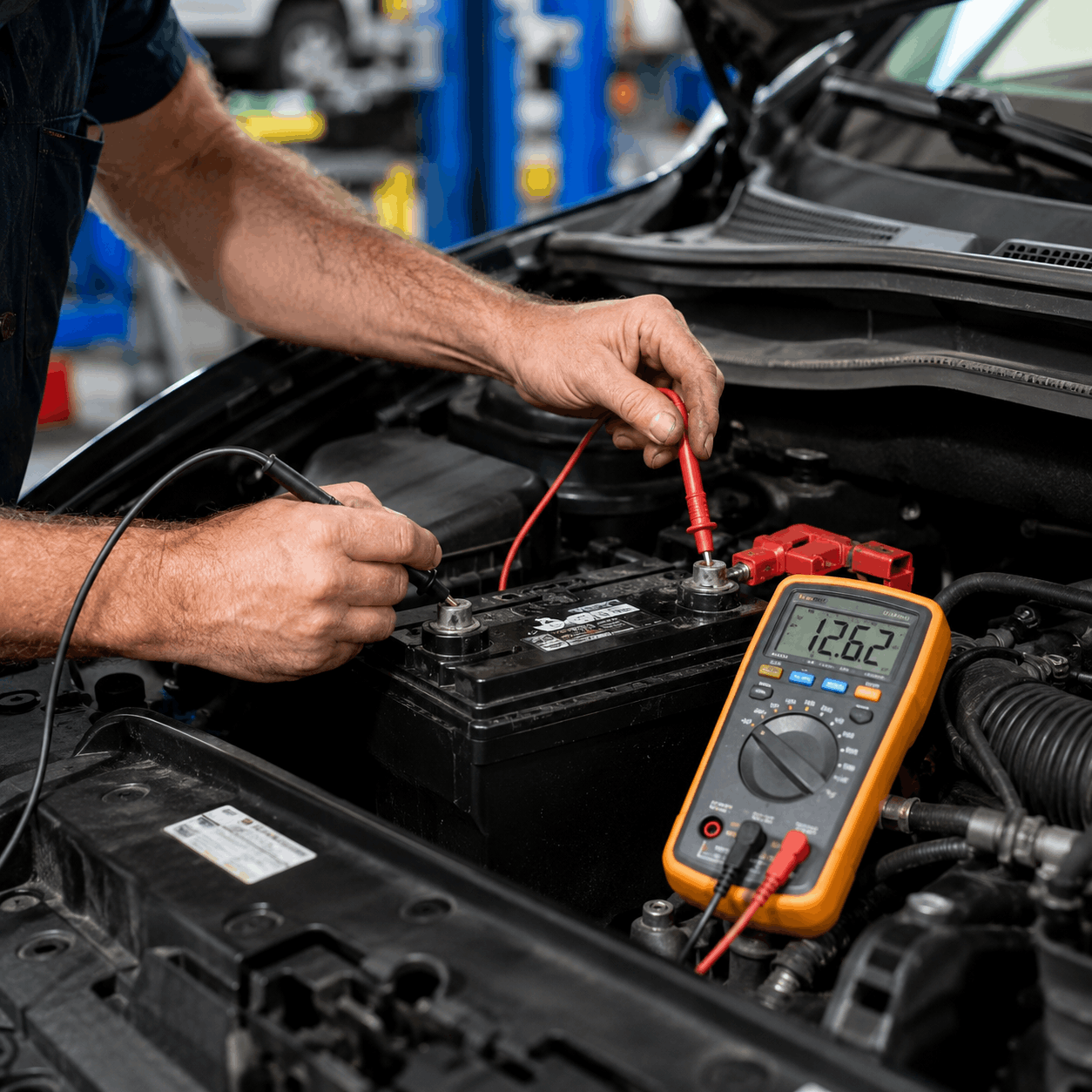
If a fault code points to a specific sensor, we do not simply replace it. We test the circuit. We use digital volt-ohm meters (DVOM) to verify the sensor is receiving its 5-volt reference power and ground from the ECU. For high-speed signals (like crankshaft sensors or CAN-bus data lines), we connect a digital storage oscilloscope to view the actual voltage waveform in real time. This allows us to spot glitches that happen in millionths of a second.

Step 3: Parasitic Draw Testing

If your car battery dies overnight, we perform a parasitic draw test. We connect an ammeter in series with the battery and monitor the current draw while the car is locked and in "sleep mode." We pull fuses one by one or perform voltage drop testing across fuses to isolate which circuit is drawing power, identifying the exact module or relay that is stuck on.

5. The Economics of Diagnostics: The "Parts Cannon" Trap

In automotive repair, electrical troubleshooting is where vehicle owners lose the most money due to poor diagnostics. Many general workshops lack advanced testing equipment and technical training. When they see a code like "O2 Sensor Circuit Malfunction," they immediately replace the oxygen sensor. When the light turns back on a day later, they replace the catalytic converter. When that fails, they suggest replacing the ECU. This unscientific approach is known as "firing the parts cannon."

A professional diagnostic assessment at our facility focuses on finding the root cause. A code for a sensor malfunction is often caused by a broken wire in the harness, a loose grounding pin, a corroded connector, or low battery voltage. By tracing the circuit and testing the wiring harness, we frequently find that a simple wire repair (costing a fraction of a new sensor) resolves the entire issue. Investing in professional diagnostics prevents wasted expenditures on unnecessary parts.

6. Dubai Survival Guide: Heat, Humidity, and Battery Care

Dubai's extreme weather conditions present specific hazards to your vehicle's electronic systems:

1. Rapid Battery Degradation

While cold weather makes starting difficult, extreme heat is what actually kills car batteries. High under-hood temperatures accelerate the internal corrosion of battery plates and evaporate the liquid electrolyte. The average lifespan of a car battery in Dubai is only 1.5 to 2 years. We recommend testing your battery and charging system before the summer starts.

2. Coastal Corrosion and Humidity

For vehicles driven in coastal areas like JBR or Dubai Marina, the combination of salty air and high humidity causes rapid oxidation on metal terminals. This oxidation creates electrical resistance. Because modern sensors operate on low-voltage signals (often 0.5 to 5.0 volts), even a minor rise in resistance due to corrosion can alter the sensor signal, triggering warning lights.

3. Thermal Expansion Wire Cracking

The temperature under a car's hood changes drastically between standing under the sun and running on the highway. This constant thermal cycling causes copper wires and their plastic protective insulation to expand and contract, leading to hairline cracks in the insulation that let moisture in, causing short circuits.

7. Frequently Asked Questions (FAQs)

Can I use a generic code reader to clear my check engine light?

Generic readers can clear code memories, but they do not fix the underlying mechanical or electrical fault. The light will return once the ECU completes its self-test drive cycle. Clearing codes also erases valuable freeze-frame data, making it harder for a professional technician to diagnose the original issue.

What does it mean if my check engine light is flashing?

A flashing check engine light indicates a severe, active engine misfire. In this state, raw fuel is being dumped into the hot exhaust system and burning inside the catalytic converter, which can melt the converter's internal core within minutes. You must pull over safely, turn off the engine immediately, and tow the car to a workshop.

How do you test if an alternator is failing?

We connect a specialized battery/alternator tester and load-test the system. A healthy alternator should output between 13.5 and 14.5 volts with accessories running. We also use oscilloscopes to check the alternator's AC ripple voltage; if a diode inside the alternator has failed, it will leak AC current into the DC electrical system, scrambling vehicle computers.

Why did my dashboard lights flicker and my steering wheel lock up?

This is a classic sign of sudden electrical power loss. It can be caused by a loose battery terminal, a failing main engine ground strap, or a failing ignition switch. Modern power steering systems are electronic; if system voltage drops below a threshold, the power steering shuts off instantly, making the wheel extremely heavy.

Can you repair a damaged wire harness, or must it be replaced?

Buying a new factory wire harness can cost thousands of dirhams. We can repair harnesses by cutting out damaged sections, soldering in new automotive-grade wires, and sealing the joints with adhesive-lined heat shrink tubing to prevent moisture entry. Replacing the entire harness is required only if it has suffered extensive fire damage.

Why do I need module programming after replacing a part?

Modern replacement parts (like steering racks, throttle bodies, or transmission valve bodies) contain their own electronic circuit boards. Modern anti-theft and network security require these parts to be programmed or 'flashed' with your vehicle's unique VIN (Vehicle Identification Number) so they can communicate with the main ECU. We use official manufacturer servers to complete this coding.

8. Trust Your Vehicle's Electronics to the Experts

Don't let complex electrical glitches or warning lights compromise your vehicle's safety and reliability. At our service center, we treat your car's electronic systems with the clinical precision they require. We invest in dealer-level diagnostic computers for all major European, Asian, and American makes. Our certified auto electricians possess years of experience in reading wiring schematics, testing circuits, and programming ECUs. We provide transparent diagnostics, detailed estimates, and a guarantee on all electrical repairs. Contact us today to schedule an advanced electrical diagnostic scan and resolve your issues.

What our Customers Say about us

EXCELLENT

Based on 9 reviews

K

Khalid Al Mazrouei

2 weeks ago

My car battery was completely dead and wouldn't hold a charge. The technician diagnosed the issue quickly and replaced it with a quality battery. The repair was done at my office parking - super convenient!

N

Nadia Ahmed

3 weeks ago

Excellent battery repair service! They tested my battery, found it was just corroded terminals, cleaned everything up and saved me from buying a new one. Honest and professional service.

R

Rajesh Kumar

1 month ago

Called them at 7 AM when my battery died. The technician arrived within 30 minutes, diagnosed the alternator issue, and got my car running. Fast, reliable, and reasonably priced!