logo
Transmission Repair Dubai

Precision Gearbox & Transmission Repair

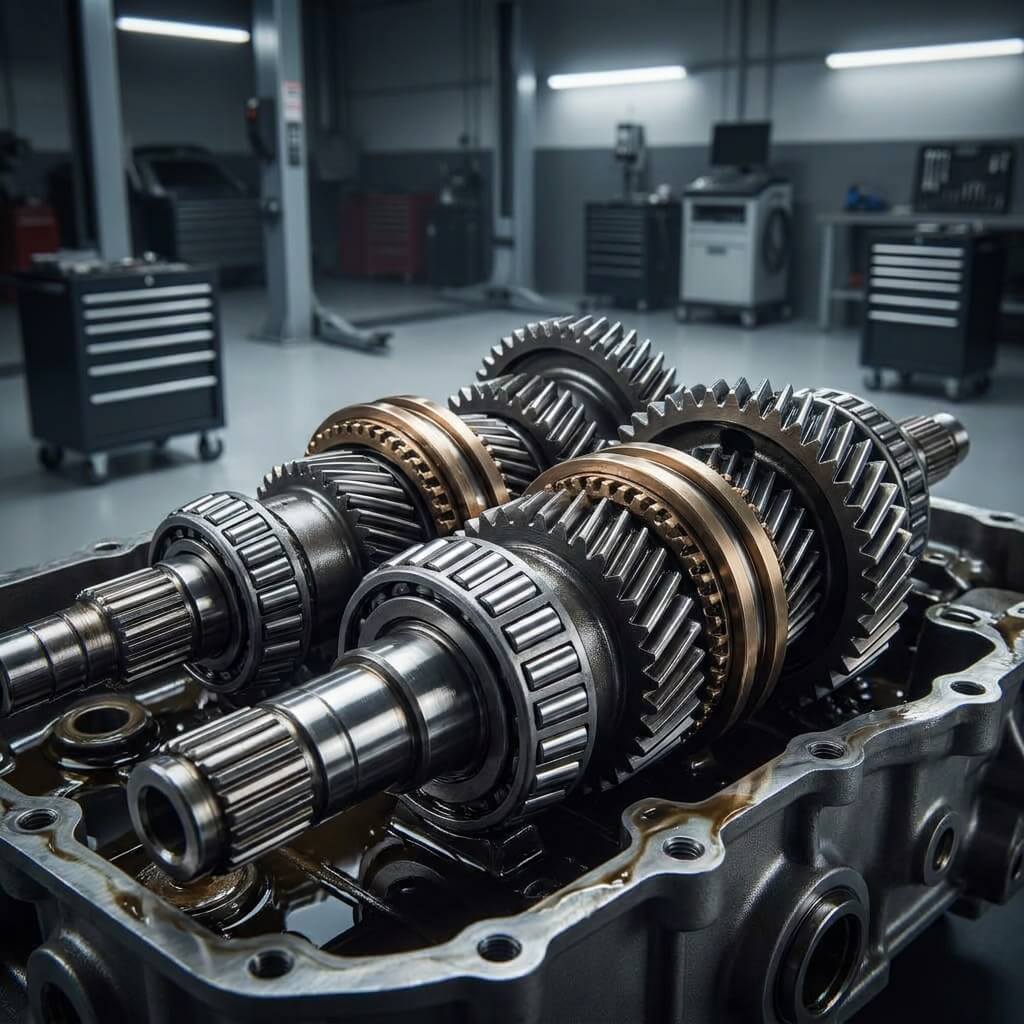
The transmission is the crucial bridge between your engine's power and your vehicle's wheels. When shifting becomes rough or gears start slipping, you need specialists. We offer unparalleled expertise in Automatic (AT), Continuously Variable (CVT), Dual-Clutch (DCT), and Manual gearboxes across Dubai.

Certified Technicians
Fast Turnaround

Get a Free Transmission Quote

The Ultimate Guide to Car Transmission Care & Repair

1. Understanding Your Vehicle's Gearbox

While the engine generates the power, the transmission (or gearbox) is responsible for applying that power to the wheels at varying speeds. Imagine pedaling a bicycle without gears; starting from a standstill would be incredibly difficult, and pedaling at high speeds would be physically impossible. The transmission solves this physics problem by using a series of gear ratios to optimize the engine's power output across a wide range of vehicle speeds. It allows the engine to remain within its optimal RPM (Revolutions Per Minute) "power band" whether you are accelerating from a traffic light in Deira or cruising on Sheikh Zayed Road.

The transmission is an extraordinarily complex piece of machinery, particularly in modern vehicles. It combines mechanical gears, hydraulic fluid pressure, and sophisticated computer electronics. Because of this complexity, transmission repairs are widely considered to be among the most challenging and specialized tasks in automotive mechanics. Many general repair shops lack the specialized diagnostic tools and deep technical knowledge required to properly rebuild or calibrate modern transmissions, often resulting in misdiagnosis or unnecessarily recommending a completely new, vastly expensive unit.

In the relentless heat of the United Arab Emirates, transmissions face a severe challenge. Heat is the number one enemy of a transmission. High ambient temperatures combined with stop-and-go city traffic cause transmission fluid to rapidly degrade, lose its lubricating properties, and fail to carry away the intense heat generated by internal friction. When the fluid breaks down, the internal clutches and bands begin to slip and burn, sending abrasive metal and clutch material throughout the system. At our specialized facility, we are uniquely equipped to handle the specific demands that Dubai's environment places on vehicle transmissions.

2. Technical Anatomy: Types of Transmissions

Not all transmissions are created equal. The repair approach differs radically depending on the specific technology inside your vehicle. Here is a breakdown of the primary transmission types we service:

Traditional Automatic Transmissions (AT)

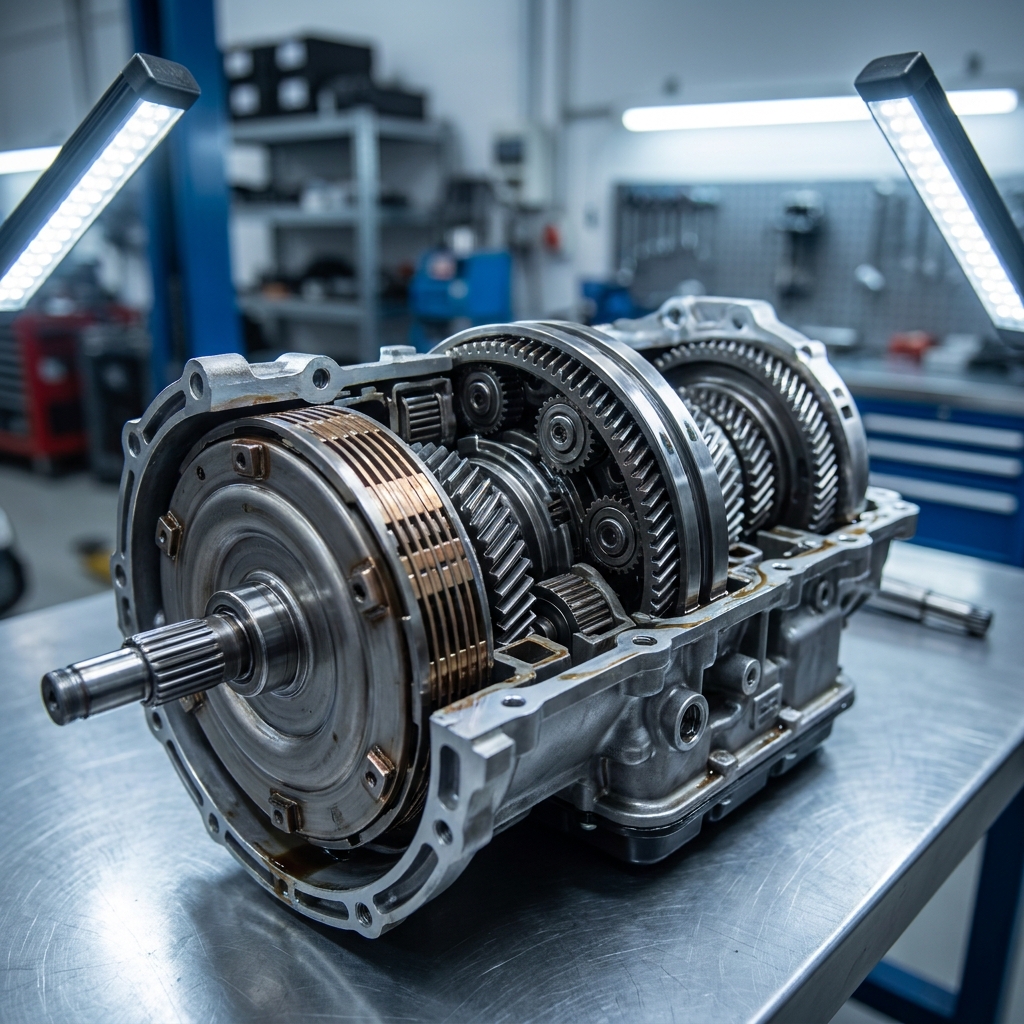
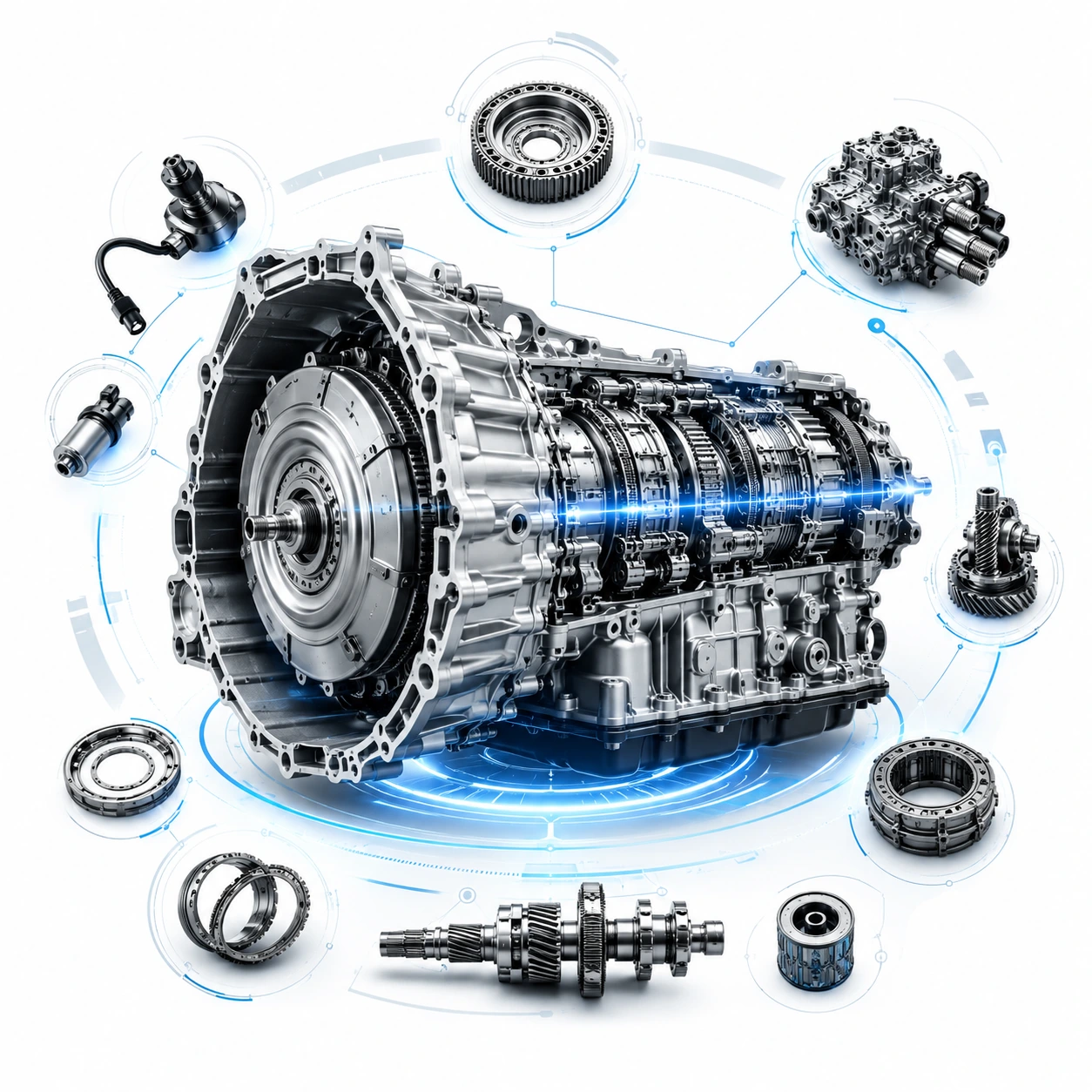
The most common type found in passenger vehicles. It uses a torque converter (a fluid coupling) instead of a clutch to transfer power from the engine. Inside, it utilizes complex planetary gear sets, hydraulic valve bodies, solenoids, and friction clutches. Gear changes are executed automatically by hydraulic fluid pressure directed by the Transmission Control Module (TCM). When an AT fails, it is often due to a clogged valve body, failing solenoids, or burnt friction clutches.

Continuously Variable Transmissions (CVT)

Commonly found in modern Japanese vehicles (like Nissan and Honda) for enhanced fuel economy. Instead of fixed gears, a CVT uses a robust steel belt running between two variable-diameter pulleys. As the pulley sizes change, the gear ratio changes continuously and seamlessly. CVTs are incredibly sensitive to fluid degradation. A common failure point is the steel push-belt snapping or scoring the pulley cones, which often necessitates a complete rebuild or replacement.

Dual-Clutch Transmissions (DCT / DSG)

Found in high-performance and European vehicles (like Porsche's PDK, VW/Audi's DSG). It operates like two manual transmissions housed in one case, utilizing two separate clutches for odd and even gear sets. This allows for lightning-fast, seamless gear changes. DCTs are highly complex and rely heavily on a "Mechatronic" unit (the hydraulic and electronic control brain). Repairs often involve replacing worn dual-clutch packs or repairing the Mechatronic unit.

Manual Transmissions (MT)

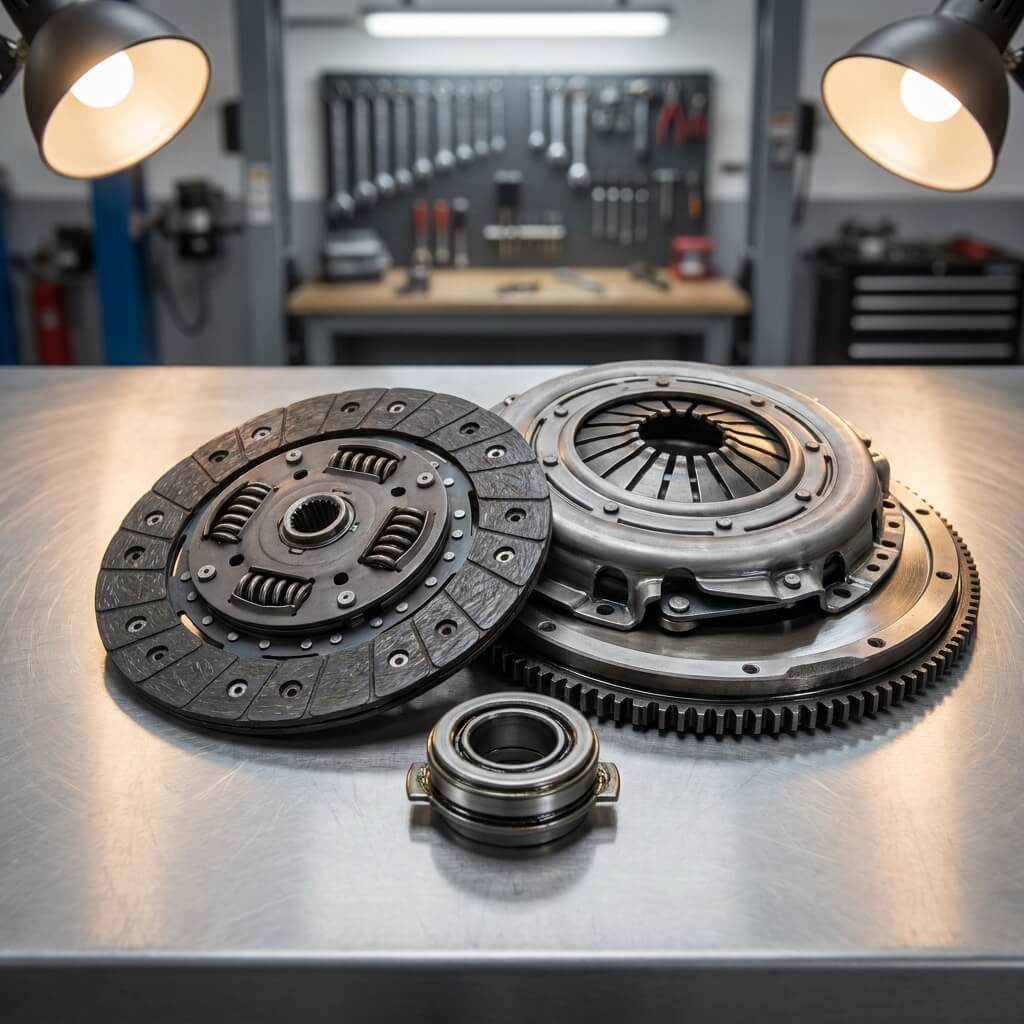
The traditional gearbox requiring the driver to manually operate a clutch pedal and gear selector. While mechanically simpler and generally more robust than automatics, manual transmissions suffer from wear to the clutch disc, pressure plate, throw-out bearing, and internal synchronizer rings (which can cause "grinding" when shifting into a specific gear).

3. Unmistakable Warning Signs of Transmission Failure

Unlike a tire blowout or a dead battery, transmission failures rarely happen instantaneously without prior warning. The transmission will usually exhibit distinct symptoms indicating that internal wear is occurring. Identifying and acting upon these signs early can be the difference between a minor repair and a catastrophic failure costing tens of thousands of dirhams.

  • Delayed Engagement or Hesitation

    When you shift the gear selector from Park to Drive, or Park to Reverse, there should be an immediate, firm engagement. If there is a noticeable delay of 2 to 3 seconds before you feel the transmission engage and the car begins to move, this is a classic sign of low fluid pressure, internal seal leaks, or failing solenoids.

  • Slipping Gears and High RPMs

    If you press the accelerator and the engine RPMs surge wildly upward but the vehicle fails to accelerate proportionally, the transmission is "slipping." This means the internal friction clutches or bands are worn out and can no longer grip the gears tightly enough to transfer the engine's power. This requires immediate attention to prevent the destruction of the planetary gears.

  • Harsh, Clunky, or Jerky Shifting

    Modern automatic transmissions should shift smoothly, often imperceptibly. If your vehicle violently jerks, clunks, or "slams" into the next gear during acceleration or deceleration, the valve body (the hydraulic control center) is likely failing, or the electronic Transmission Control Module requires reprogramming and calibration.

  • A Pungent, Burning Smell

    A burning smell emanating from beneath the vehicle is never acceptable. In the context of a transmission, this indicates that the transmission fluid has severely overheated and is literally burning, destroying its lubricating properties and actively destroying the internal friction materials.

  • Red or Brown Fluid Leaks

    Transmission fluid is typically dyed bright red (though it turns dark brown or black as it degrades). If you notice a red puddle forming under the middle or front of your parked car, you have a transmission leak. Operating a transmission with low fluid levels is guaranteed to destroy the unit.

4. Our Rigorous Transmission Diagnostic Protocol

Because transmission replacement is highly expensive, we firmly believe in exhausting every diagnostic avenue before recommending a major overhaul. Our diagnostic approach is multi-tiered and highly analytical.

1
Electronic Systems Analysis

Many perceived transmission failures are actually electrical faults. A bad speed sensor, a faulty mass airflow sensor, or a damaged wiring harness can cause the TCM to command harsh shifts or enter "Limp Mode." We use advanced, dealer-level diagnostic scanners to interrogate the TCM, retrieve trouble codes, and analyze live data to rule out external electronic causes.

2
Fluid Condition & Hydraulic Pressure Testing

The condition of the fluid tells the story of the transmission's health. We extract a sample to check for burnt smell, discoloration, and metallic debris (which indicates severe internal gear or clutch failure). If necessary, we connect physical pressure gauges to the transmission's test ports to verify that the internal hydraulic pump is generating the necessary pressure to engage the gears.

3
Valve Body & Solenoid Bench Testing

If the issue is isolated to harsh shifting or delayed engagement, the culprit is often the valve body—the intricate maze of hydraulic channels and electronic solenoids. We can remove the valve body without removing the entire transmission, place it on a specialized testing bench, and determine exactly which valve or solenoid is failing.

5. Comprehensive Repair & Overhaul Solutions

Upon completing our diagnostics, we present you with transparent, evidence-based repair options. We categorize our services into three distinct levels:

Level 1: Preventative Maintenance & Minor Repairs

If the transmission is mechanically sound but suffering from fluid degradation or minor electronic faults, we perform:

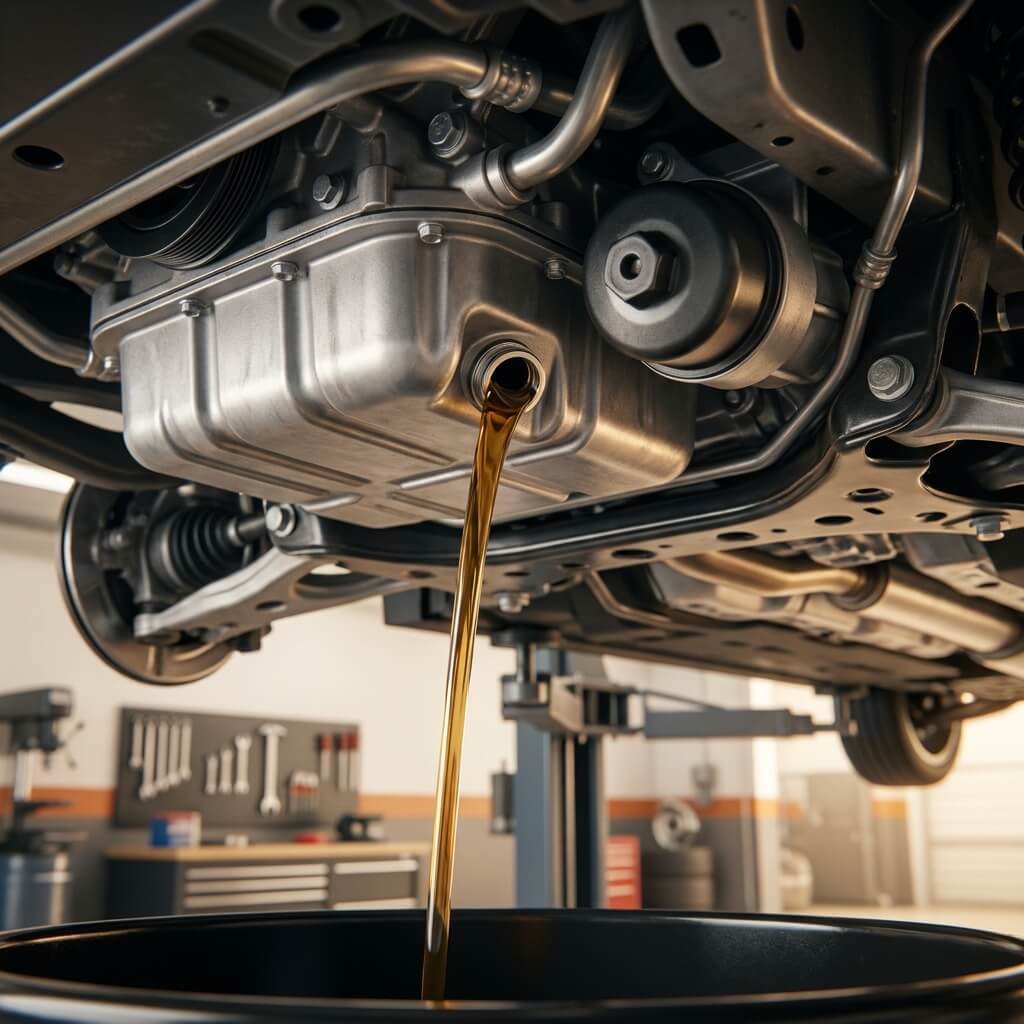
  • Dynamic Fluid Flush & Filter Replacement: We flush 100% of the old fluid (including the fluid trapped in the torque converter), clean the oil pan, and install a new OEM filter and pan gasket.
  • Solenoid Replacement: Swapping out defective shift solenoids located on the valve body.
  • TCU Software Updates: Flashing the Transmission Control Module with the latest manufacturer software to resolve shifting bugs.

Level 2: Targeted Component Repair

When specific sub-assemblies fail, we execute targeted repairs without a full teardown:

  • Mechatronic Unit Repair (DCT/DSG): We repair or replace the complex Mechatronic unit common in German vehicles, saving you from a complete transmission replacement.
  • Valve Body Rebuilding: We completely disassemble, clean, ream, and install oversized valves in the hydraulic control unit to restore proper fluid pressure routing.
  • Clutch Replacement (Manual & DCT): Replacing worn friction discs, pressure plates, and dual-mass flywheels.

Level 3: Complete Transmission Overhaul / Rebuild

When internal friction clutches are burnt, or planetary gears have shattered, a complete overhaul is mandatory. We remove the transmission, disassemble it completely on a clean bench, and inspect every single gear, bearing, and shaft. The unit is placed in an industrial parts washer. We then reassemble the transmission using an overarching "Master Rebuild Kit," which includes brand new friction clutches, steel plates, seals, gaskets, O-rings, and bands. The torque converter is also cut open, rebuilt, and dynamically balanced. The result is a transmission that meets or exceeds factory specifications, essentially giving you a brand-new gearbox.

6. The Economics: Repair vs. Replace

When faced with transmission failure, vehicle owners often wonder whether to repair, rebuild, or replace. Buying a brand-new transmission directly from the dealership is exorbitantly expensive, often exceeding the value of older vehicles. Buying a used "scrapyard" transmission is a massive gamble; you have no idea how it was driven, and it may fail a week after installation.

A professional, specialized rebuild at our facility is the golden middle ground. It is significantly more affordable than a dealership replacement, yet offers the reliability of a new unit because all the internal wearing components (the parts that actually fail) have been replaced with brand-new OEM-quality parts. Furthermore, we often install upgraded aftermarket components that address known factory design flaws, making your rebuilt transmission stronger than the original.

7. Maximizing Transmission Life in the UAE Climate

Transmissions generate massive amounts of internal heat. The ambient heat of Dubai exacerbates this, causing transmission fluid to break down rapidly. Once the fluid breaks down, friction increases, creating even more heat in a destructive loop.

  • A.

    Halve the Service Interval

    If your owner's manual suggests a transmission fluid change every 100,000km, ignore it. In the UAE's "severe driving conditions," we strongly mandate changing the transmission fluid and filter every 40,000 to 60,000km. This is the single most effective way to prevent transmission failure.

  • B.

    Install an Auxiliary Transmission Cooler

    If you drive a heavy SUV, tow trailers, or frequently go dune bashing in the desert, your factory transmission cooler is insufficient. We highly recommend installing an aftermarket auxiliary transmission fluid cooler. Dropping the fluid temperature by just 20 degrees can double the lifespan of the transmission.

  • C.

    Stop completely before shifting

    A common driver error that destroys transmissions is shifting into Park or Reverse while the vehicle is still rolling forward slightly. This places immense mechanical stress on the internal parking pawl and planetary gear sets. Always come to a complete, dead stop before changing directional gears.

8. Frequently Asked Questions (FAQs)

How long does a transmission rebuild take?

A full transmission removal, teardown, rebuild, reinstallation, and programming typically takes between 4 to 7 working days, depending on parts availability.

What does 'Limp Mode' mean?

Limp Mode (or Failsafe Mode) is a protective feature. When the computer detects a severe transmission fault, it locks the transmission into a single gear (usually 3rd gear) to prevent further internal damage while allowing you to 'limp' to a repair shop. Do not drive extensively in Limp Mode.

Can I just change the fluid to fix a slipping transmission?

Unfortunately, no. If the transmission is already slipping, the internal friction material on the clutches has worn away. New fluid will not restore missing friction material. In fact, sometimes changing fluid on a severely worn transmission can cause it to stop working entirely, as the old, gritty fluid was providing the only remaining friction.

Do you repair CVT transmissions?

Yes. CVT transmissions require highly specialized knowledge and unique fluids. We diagnose, repair, and replace CVT push-belts and pulleys for Nissan, Honda, Toyota, and other makes.

Why is transmission fluid so expensive?

Modern transmissions require highly specific, technologically advanced synthetic fluids. Using the wrong fluid (e.g., putting regular ATF in a CVT or DCT) will cause catastrophic failure almost immediately. We only use OEM-specified fluids.

Do you provide a warranty on transmission rebuilds?

Absolutely. We stand by our master rebuilds with a comprehensive warranty covering both parts and labor, providing you with long-term peace of mind.

9. Why Entrust Your Transmission to Us?

Transmission repair is not for amateurs or general mechanics. It requires clinical cleanliness, specialized hydraulic testing equipment, and deep knowledge of complex planetary gear mathematics and fluid dynamics. At our facility, we invest heavily in the latest diagnostic technology and continuous training for our technicians. We pride ourselves on ethical diagnostics—we will never recommend a full rebuild if a simple solenoid replacement will fix the issue. We provide photographic evidence of internal damage and transparent pricing. Don't risk your vehicle's most expensive component with guesswork. Contact us today for a definitive, professional transmission assessment.

What our Customers Say about us

EXCELLENT

Based on 9 reviews

K

Khalid Al Mazrouei

2 weeks ago

My car battery was completely dead and wouldn't hold a charge. The technician diagnosed the issue quickly and replaced it with a quality battery. The repair was done at my office parking - super convenient!

N

Nadia Ahmed

3 weeks ago

Excellent battery repair service! They tested my battery, found it was just corroded terminals, cleaned everything up and saved me from buying a new one. Honest and professional service.

R

Rajesh Kumar

1 month ago

Called them at 7 AM when my battery died. The technician arrived within 30 minutes, diagnosed the alternator issue, and got my car running. Fast, reliable, and reasonably priced!