
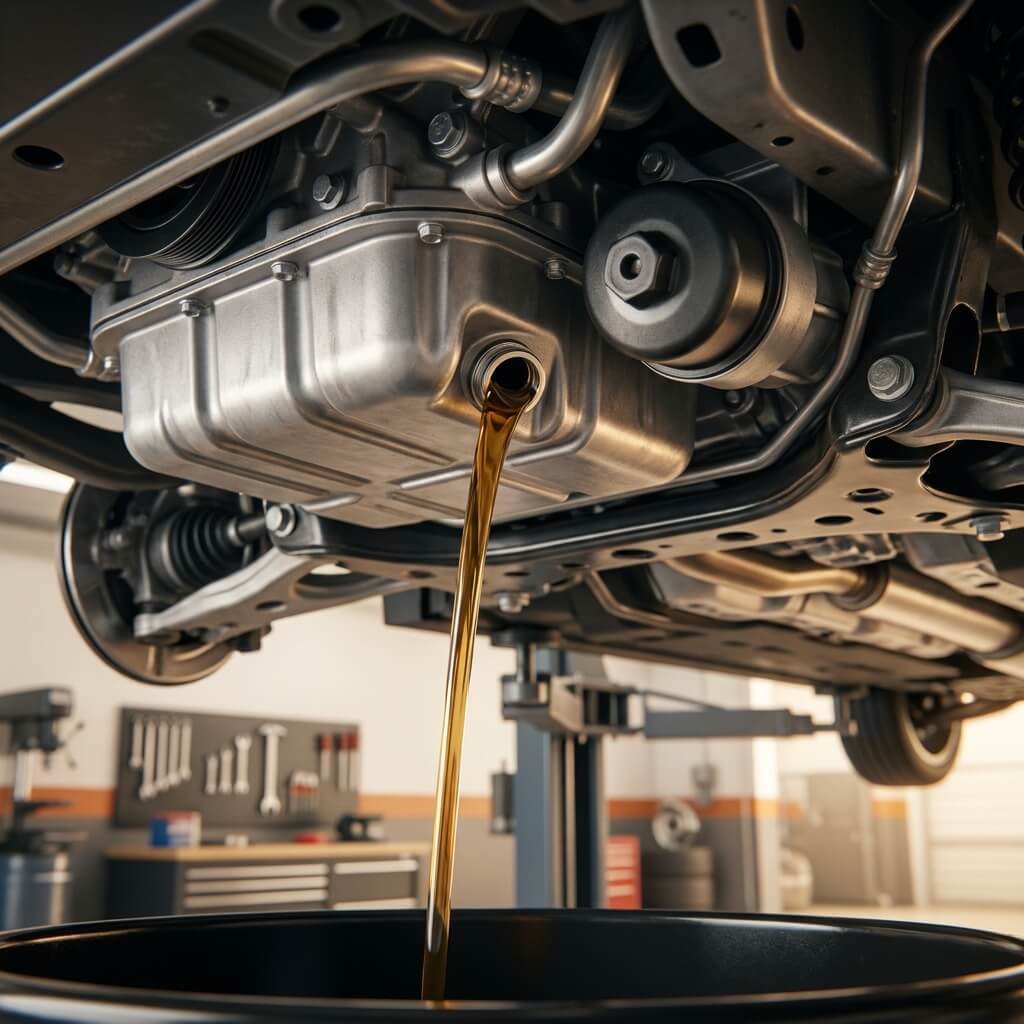
Car Oil Change & Lubrication Service in Dubai
Engine oil is the lifeblood of your vehicle. Under the intense thermal demands of the UAE climate, regular oil changes are your first line of defense against catastrophic engine wear. We use only premium fully synthetic oils and genuine OEM filters.
Our Oil Change Services
Comprehensive lubrication and filter solutions to protect your engine in Dubai heat.
Synthetic Oil Change
Precision drain and refill with premium fully synthetic lubricants matching manufacturer approvals such as BMW Longlife, Mercedes-Benz, and Porsche specs.
Oil Filter Replacement
Genuine OEM filters installed with every oil change to trap soot, metal particles, and abrasive contaminants before they circulate through your engine.
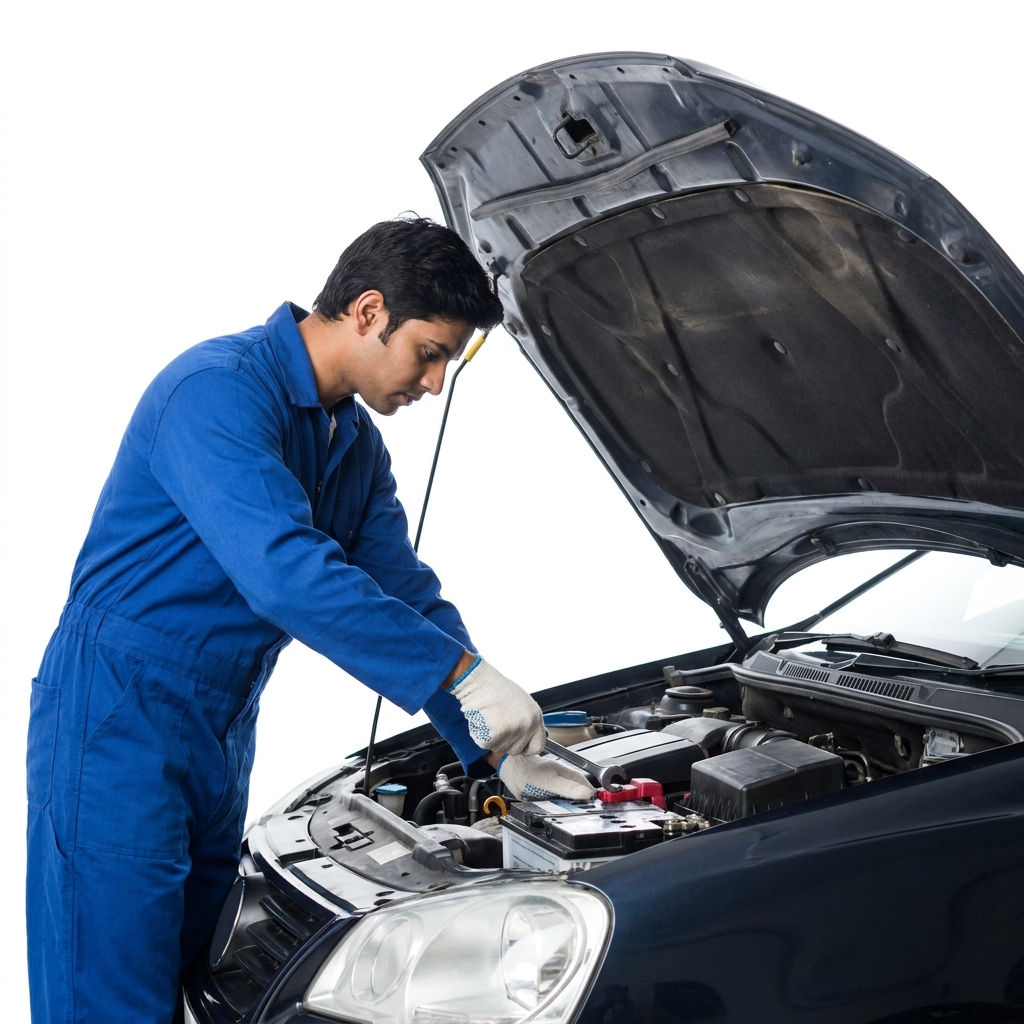
Multi-Point Safety Check
360-degree inspection of coolant, brake fluid, battery health, air and cabin filters, and tyre tread depth while your oil is being serviced.
Service Reset & Road Test
We reset your vehicle service reminder, verify oil pressure, check for leaks, and record mileage for your next maintenance interval.
How It Works
Our streamlined process ensures a hassle-free service experience from start to finish
Book Your Service
Choose how you want to book. We're available across multiple channels for your convenience.
Phone
Our call centre operates daily. Call us at +971 56 777 6694.
Online
Make a booking online in just a few clicks.
Download the App
Book at the tap of a button with our mobile app.

Signs Your Car Needs an Oil Change
Do not wait for the dashboard light. These warning signs mean your oil is no longer protecting the engine.
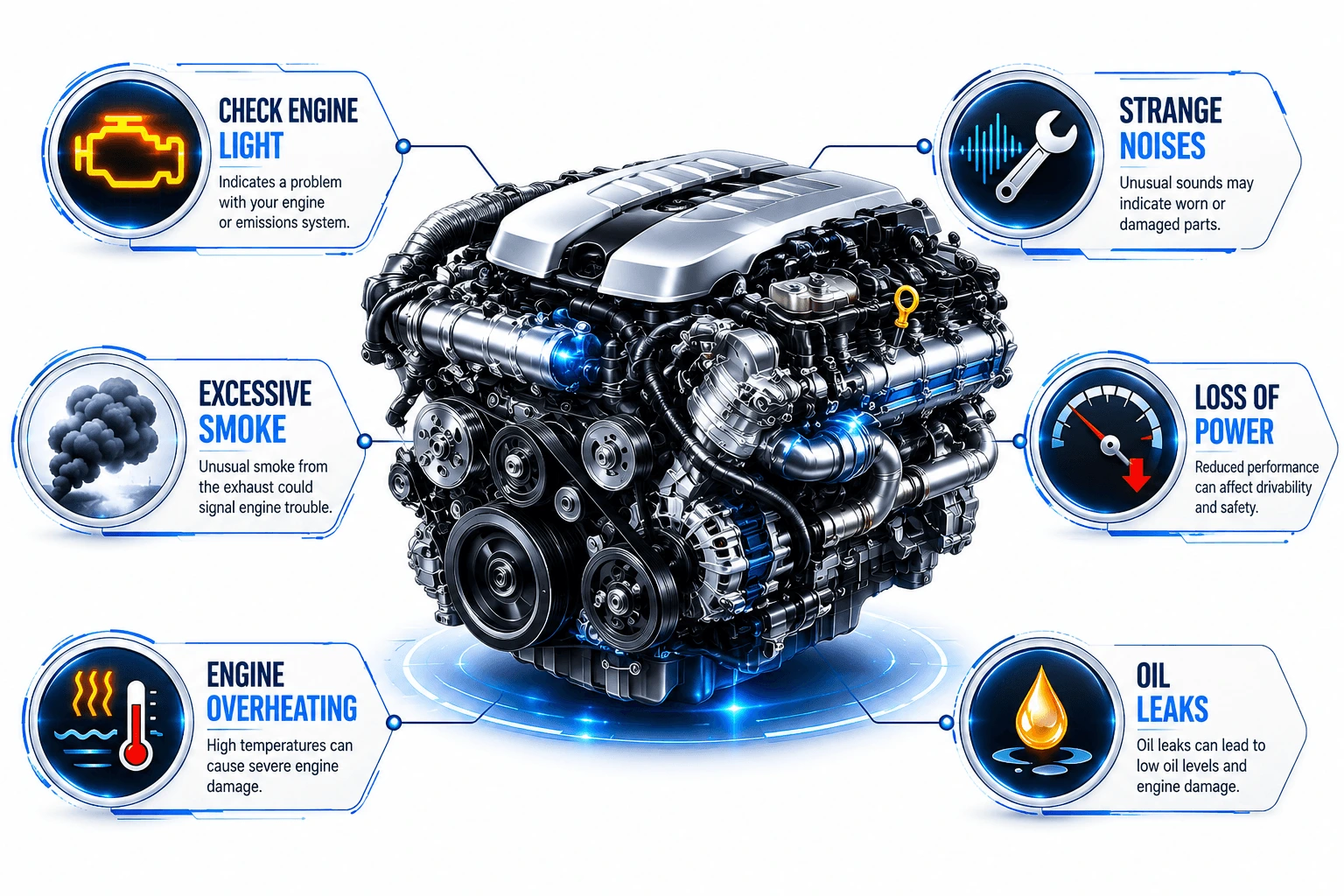
How to Avoid Engine Wear Between Oil Changes
Simple habits that keep your engine lubricated and running cleanly in the UAE.
Follow Severe-Service Intervals
In Dubai heat and dust, change fully synthetic oil every 10,000 km or 6 months, and high-performance engines every 7,500 km.
Use the Correct Viscosity
Always use the oil grade approved by your manufacturer. The wrong viscosity can cause poor cold-start flow or insufficient protection under heat.
Replace the Filter Every Time
A clogged filter forces the bypass valve open, sending dirty oil back into the engine and accelerating wear on bearings and cylinder walls.
Check Oil Levels Weekly
Hot weather and traffic increase oil consumption. A weekly dipstick check catches low levels before they cause oil starvation.
Avoid Short Trips
Frequent trips under 10 km do not let the oil reach operating temperature long enough to evaporate condensation and fuel dilution.
Park in Shade When Possible
Reducing under-hood temperatures slows oil oxidation and helps seals and gaskets last longer.
Comprehensive Car Oil Change & Lubrication Guide
Engine oil is the single most critical routine service item for any internal combustion engine. It creates a microscopic protective barrier between moving metal parts, preventing metal-on-metal contact, reducing friction, and carrying heat away from pistons, bearings, and crankshafts. Modern engine oil also contains detergent additives that capture carbon soot, metallic dust, and dirt particles, holding them in suspension until the oil is drained. Without regular oil changes, this oil turns into abrasive sludge that blocks internal passages and accelerates engine wear.
In Dubai and the wider UAE, ambient temperatures regularly exceed 45°C during summer. This extreme heat accelerates the oxidation and thermal breakdown of engine oil, reducing viscosity and compromising protective qualities. Airborne sand and dust add further contamination. That is why manufacturer severe-service schedules apply here: we strongly recommend changing fully synthetic oil every 10,000 kilometers or six months, and high-performance engines every 7,500 kilometers.
Not all engine oils are equal. Mineral oil is refined from crude and breaks down quickly under heat. Synthetic blends offer a middle ground, while fully synthetic oil is engineered with uniform molecules that withstand temperatures from -40°C to over 150°C without shearing or oxidizing. For turbocharged, high-performance, and modern engines common on UAE roads, fully synthetic oil is essential. Viscosity ratings such as 5W-30 describe cold-start flow and high-temperature thickness; using the wrong grade can cause poor fuel economy, timing chain wear, or internal damage.
The oil filter is equally important. A quality filter captures particles as small as 10 microns. A cheap or clogged filter reduces oil pressure and can trigger a bypass valve, allowing dirty, unfiltered oil to recirculate and score bearings and cylinder walls. That is why we replace the filter, the drain-plug crush washer, and surrounding seals at every service, torquing the drain plug to exact manufacturer specifications.
Our professional oil change protocol goes far beyond a quick-lube service. We warm the engine for a complete hot drain, replace the filter and washer, refill with the exact approved viscosity, verify oil pressure, reset the service indicator, and perform a multi-point safety check. We stock premium certified lubricants including Mobil 1, Castrol, and Shell, and use only genuine OEM filters. Keep your engine running smoothly in the desert heat — contact 800 Motor today to book your premium oil change service in Dubai.
Why Choose 800 Motor
800 Motor is all about making car service simpler, safer, and stress-free
Convenience
Book Anywhere
Book from home, office, or roadside across Dubai, Abu Dhabi, Sharjah, and beyond.
Pickup & Drop-off
We collect your car, coordinate the service, and return it when the work is done.
Quality
Certified Workshops
Verified garages and trained technicians handle the work with the right tools.
Warranty Protection
Repair warranty support and safe payment options give you confidence after booking.
Transparency
Live Updates
Stay informed with status updates throughout the service journey.
Transparent Pricing
Clear estimates before work starts, with no hidden charges or surprise add-ons.


















What Our Customers Say
Trusted by thousands of car owners across the UAE
Based on 5 reviews

Ahmed Hassan
2 weeks ago
I was stranded on Sheikh Zayed Road during rush hour. arrived in 15 minutes and had me back on the road in 10. Incredible service!

Sarah Johnson
6 months ago
The technician was professional and explained everything. The Bosch battery they installed has been working perfectly for 6 months now.

Mohammed Ali
1 month ago
Called at 2 AM when my battery died. They arrived in 20 minutes and had my car running in less than 25. Outstanding service at a fair price.